
 WELLNESS
The Rise of Luxury Wellness in Marbella: Where the Mediterranean Meets Conscious Living
How Marbella quietly became one of Europe's most sought-after destinations for serious, integrated wellness.

Utopia Lifestyle ·
Breathwork is a structured practice in which you breathe in a specific pattern, usually lying down, for a sustained period, with a facilitator guiding you throughout. Private sessions in Marbella typically run sixty to ninety minutes and are held at your villa or somewhere quiet. No prior experience is needed.
Stripped of its more esoteric framing, breathwork is straightforward. You lie down. A facilitator sets a breathing pattern — most commonly conscious connected breathing, without the pause between inhale and exhale — and you hold that pattern for a sustained stretch while they stay with you. Music usually runs underneath. Toward the end the breathing slows and you rest, and there is time afterwards to talk through anything that came up, which is a genuine part of the session rather than a courtesy. It is not meditation and it does not ask you to clear your mind, which is precisely why people who have repeatedly failed at meditation get on with it. You are given something concrete to do, and doing it occupies the part of the mind that would otherwise be narrating. The whole thing is considerably less mysterious than the language around it suggests.
What gets people's attention is the physiology, and it is worth being careful here rather than overclaiming. Breathing is the only autonomic function you can take over deliberately — your heart rate and digestion run without you, but your breath will do what you tell it. That makes it an unusually direct handle on the autonomic nervous system, and it is the reason breath-based practices appear in contexts as different as clinical anxiety protocols, military training and freediving. The research base is real but narrower than the popular framing suggests, and it is honest to say that the strongest evidence sits with slow-breathing techniques for acute stress rather than with every claim made for the practice. It is complementary, not medical, and it is not a substitute for treatment. Anyone telling you it cures a specific condition is overstating what is actually known.
This is why high performers began taking it seriously. Executives running large teams, athletes managing competitive pressure, founders holding a lot at once — the common thread is people who are good at effort and bad at stopping. For that group the appeal is not spiritual; it is that here is a lever on their own state that works in an hour and does not require believing anything. Several arrive frankly sceptical, having been sent by someone, and the scepticism turns out not to matter much because the practice is physiological rather than persuasive. The other draw is that it is portable. Once you know the pattern, it travels with you into a hotel room in another city, which is more than can be said for most of what people try. The scepticism, if anything, tends to make for a more useful first session than enthusiasm does.
“The breath is the only function of the nervous system you can consciously control. Used well, it changes everything.”
A private session runs roughly like this. You arrive somewhere quiet — a room at your villa, a private space, sometimes outdoors early in the morning. There is a short conversation first about what you want from it and anything relevant going on, because the session is adapted to the day rather than run to a script. You lie down. The facilitator sets the pattern, stays with you throughout, and adjusts pace or offers touch if that has been agreed beforehand. Physical sensations are common and normal, and you are told this in advance rather than left to wonder. It ends with several minutes of rest and then conversation. If it stops working for you partway through, saying so is an ordinary part of the process. Water afterwards, and no plans for the next hour, are the only preparation worth making.
The difference between a private session and a group class is significant, though group work has real value and the energy of a full room can carry people. But a class has to be pitched at the middle of that room. It runs to a fixed pattern and a fixed length regardless of who turned up or what state they are in. A private session is adapted in the moment — the pace changes, the length changes, the conversation afterwards takes as long as it takes. For a first session in particular, that adaptability matters, because the most common reason people conclude breathwork is not for them is that their first experience of it was calibrated for someone else entirely. Private also means no audience, which for some people is the entire point. For a first session in a new city, private is almost always the better use of the hour.
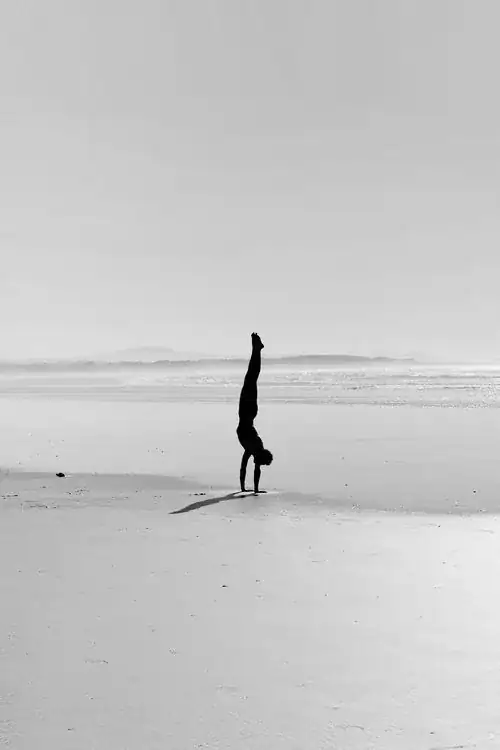
Marbella turns out to be an unusually good setting for this. The climate makes outdoor sessions realistic for most of the year, and an early-morning session on an empty beach before the coast wakes up is a materially different experience from the same practice in a treatment room. The pace of life here supports actually integrating something rather than doing it once and going home. And because a large share of people are on long stays rather than short breaks, there is time to do a first session, sit with it, and come back — which is how the practice does anything at all. We hold sessions across the coast and bring them to you, so attending one costs you no travel at either end. Early mornings on the beach, before the coast wakes up, are the slot people ask to repeat.
Ready to book?
Utopia Wellness HubWELLNESSHow Marbella quietly became one of Europe's most sought-after destinations for serious, integrated wellness.
 LIFESTYLE
From choosing the right property to curating every detail of your stay — the quiet art of a flawless Marbella villa holiday.