
 LIFESTYLE
The Art of the Perfect Marbella Villa Holiday
From choosing the right property to curating every detail of your stay — the quiet art of a flawless Marbella villa holiday.
Utopia Lifestyle ·
Marbella works as a base rather than a holiday because it combines a genuinely mild winter, an international resident population, mountains and sea within minutes of each other, and an airport forty minutes away with direct flights across Europe. The result is a place people return to on repeat rather than visit once.
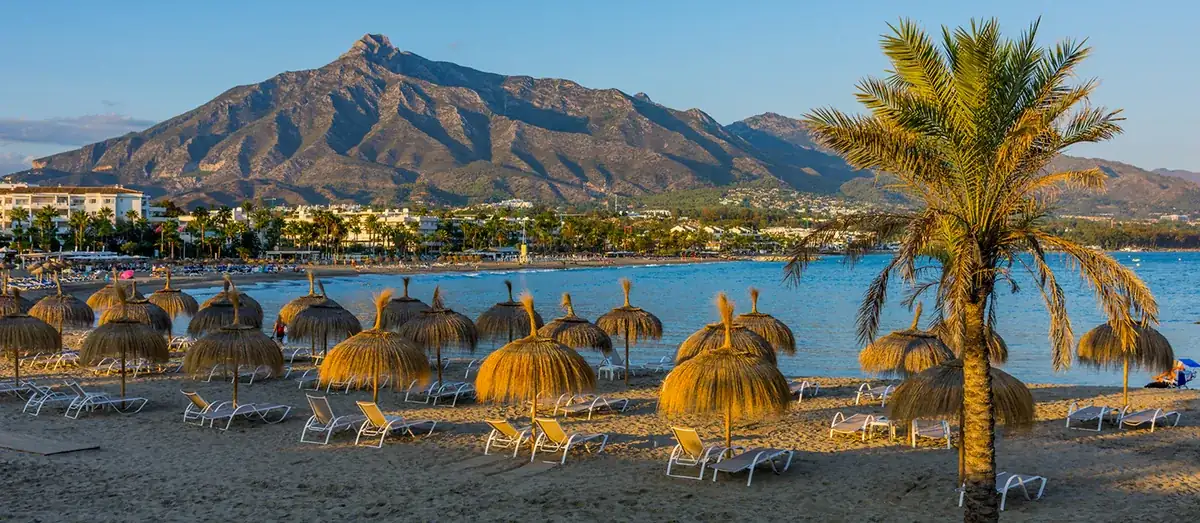
Begin with the climate, because it underwrites everything else. Roughly three hundred sunny days a year is not marketing copy; it is close to statistical truth, and the number that actually matters is the winter one. Lunch outside in January is realistic on a good day. The Sierra Blanca shelters the town from the north, which is why Marbella runs a few degrees warmer than stretches of coast an hour in either direction. Summers are hot but coastal rather than oppressive, and the evenings cool enough to eat outdoors comfortably. What this produces is not simply pleasant weather but a year with no dead months, which is the difference between a resort that closes down and a town people can actually live in continuously. The practical consequence is a town that functions in February, which almost no Mediterranean resort manages.
Culture sits behind the surface here, and is routinely missed by visitors who never leave the beach clubs. Marbella's old town is quietly beautiful — whitewashed lanes, orange trees, small plazas where the restaurants are better and cheaper than anything on the seafront. Ronda is an hour inland, dramatic and genuinely historic. Granada and the Alhambra are a manageable day. Málaga, forty minutes east, has become a serious art city with a Picasso museum and a Pompidou outpost, and is now the cultural centre of gravity for the whole coast. None of this is what Marbella is known for, which is rather the point: the reputation is built on the strip, while a large share of what makes staying here work sits fifteen minutes inland from it. Málaga's airport, forty minutes away, is also what makes all of it reachable on a weekend.
The international community is a large part of what makes the place unusual. Marbella has for decades drawn people from across Europe, the Middle East and the Americas, and the practical result is that it does not function like a Spanish town with foreigners in it. Schools operate in several languages. Business gets done across nationalities as a matter of routine. You can arrive knowing nobody and be in a functioning social circle inside a season, which is genuinely rare and is the single thing returning residents cite most. It also means services here are built for people who move between countries — which is why a concierge model works on this coast and would be redundant in most towns of comparable size. English will get you a long way here, though the town rewards anyone who makes an effort in Spanish.
The lifestyle itself deserves its own consideration, because the day here has a specific shape. Early mornings are the best part and the most overlooked: the beach is empty, the light is low, and the coast belongs to whoever is awake. The middle of the day slows down properly. Evenings start late and run long, and dinner at ten is unremarkable rather than decadent. What this adds up to is a day with more usable hours in it than a northern European one, arranged differently. People who move here often describe the adjustment as taking a season, and the thing they cannot go back to afterwards is not the weather but the timing — the assumption that the evening is long and does not need scheduling. Arriving with a northern European schedule and refusing to move it is the single most common way to have a worse time than the place allows.
“Marbella is not loud about what it offers. It simply offers it — and the people who notice tend to keep coming back.”
Nature is always close, which is the part photographs of the marina never convey. The Sierra Blanca rises directly behind the town and offers hiking, riding and a view back down the coast that resets your sense of the place in about twenty minutes. La Concha, the peak above Marbella, is a serious half-day walk with the Rif mountains of Morocco visible on a clear day. West of Estepona the coast turns quiet and undeveloped. Inland, the white villages of the Serranía de Ronda are a different Andalucía entirely, and close enough for lunch. The distance from a beach club to genuine mountain is under half an hour, and it is that compression rather than any single element that makes the geography here unusual. None of it needs a four-wheel drive or any particular expertise, which is the other thing that surprises people.
Food is its own argument. Andalusian cooking — fresh fish, ham, olive oil, simple things done extremely well — sits alongside some of the most ambitious restaurants in southern Spain, and both are taken seriously. The chiringuitos on the sand grilling sardines over driftwood are not a tourist performance; they are what people actually eat. Marbella and the surrounding coast hold several Michelin-starred kitchens, and Málaga province as a whole has become a genuine culinary region rather than a place you eat while doing something else. The markets are good and the produce is local in a way that requires no effort. We book directly at twenty venues across the coast, a deliberately short list rather than a directory of everywhere that would take a reservation. Booking is still the constraint rather than choice, particularly on the coast between June and September.
Sport and movement are everywhere, and this is where the coast quietly outperforms its reputation. Golf above all — Marbella and the wider Costa del Sol hold one of the highest concentrations of quality courses in Europe, enough that the area is marketed as the Costa del Golf and the description is earned. Padel is genuinely everywhere and has become the default way people socialise midweek. Sailing and watersports run out of Puerto Banús and the smaller marinas. There is serious cycling in the hills behind the coast, road and mountain both. Horse riding, tennis, open-water swimming, running along the paseo at dawn. The through-line is that outdoor sport is possible almost every day of the year, which changes what a routine looks like. Equipment and courts are easy to arrange at short notice, which is not true everywhere in Europe.
And then there are the people. There is a specific quality to those who make Marbella their home or their regular escape — international, entrepreneurial, largely self-selected, and unusually open compared with cities where social circles are set by the time you arrive. Some are here full time, some for a season, some for a month between things, and that fluidity is what keeps it porous. Conversations start easily. The place rewards people who show up more than people who were introduced. It is also, for the same reasons, a coast where discretion is valued and where a certain number of people would rather not be named — which is a social norm worth understanding before you arrive rather than after. The corollary is that introductions matter less here than turning up regularly, which suits some people and frustrates others.
LIFESTYLEFrom choosing the right property to curating every detail of your stay — the quiet art of a flawless Marbella villa holiday.
 LIFESTYLE
Sunset dinners, beach clubs and the long, slow drift from cocktail hour to candlelit midnight — the Marbella that begins after seven.